
Categories
Maui Real Estate News, Maui Real EstatePublished December 3, 2025
Bill 9 on Maui: What We Know, What We Don’t, and What It Really Means for the Future December 3rd 2025 edition

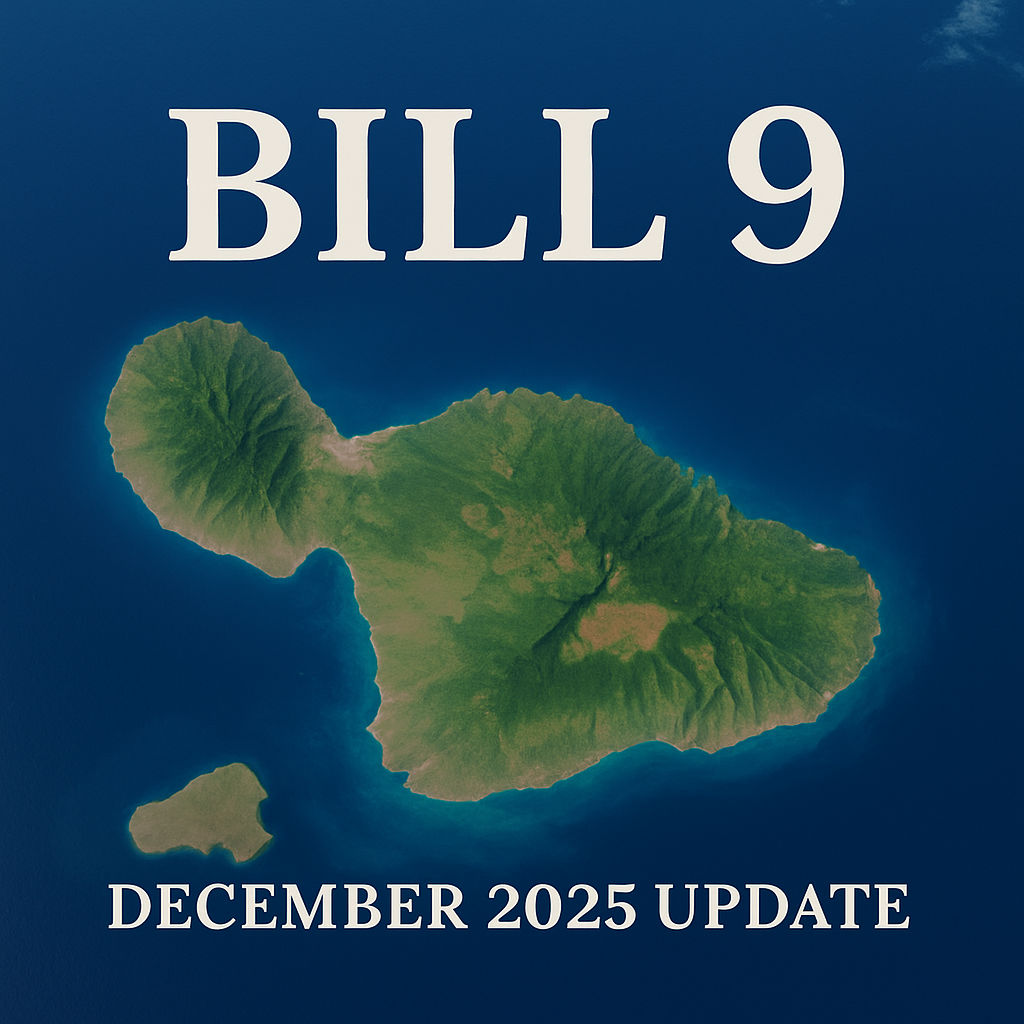
Before we get into this post I want to present facts and not my opinion...We have a housing problem on this island. I'm not sure this fixes it but hopefully it will help it.
-
Bill 9 on Maui: What We Know — and What We Still Don’t Know
As Maui continues rebuilding and reshaping its future after the devastating 2023 wildfires, few pieces of legislation have stirred more community attention, emotion, and uncertainty than Bill 9. The proposal — which passed its first reading on Dec. 1 with a 5–3 vote — aims to phase out vacation rentals in apartment-zoned districts across the island. Supporters call it a long-needed correction to protect housing for local families. Opponents warn it could trigger massive economic fallout and years of legal battles.
With the second reading approaching, here is a clear, fact-based breakdown of what we know so far, what remains unclear, and what homeowners and investors should be watching closely.
✅ What We Know About Bill 9
1. Bill 9 targets “transient vacation rentals” (TVRs) in apartment-zoned districts
For decades, many Maui apartment buildings were allowed to operate short-term rentals through “grandfathered” nonconforming use certificates. Bill 9 seeks to end those allowances and eliminate most short-term rentals in apartment zones.
This affects a significant share of Maui’s current vacation rentals — particularly across South Maui, West Maui, North Kihei, Napili/Kahana/Honokowai, and parts of Molokaʻi.
2. The phase-out isn’t immediate
As written today:
- West Maui TVRs end in 2029
- TVRs elsewhere in Maui County end in 2031
3. The bill passed first reading but is NOT law yet
The measure heads to second reading on December 15. If approved again, it goes to the Mayor for signature.
Until that happens, nothing officially changes.
4. The motivation is housing — especially post-wildfires
Maui News and Maui Now both highlight the same theme: a massive shortage of long-term housing options, intensified by the 2023 wildfires that displaced thousands.
Supporters argue Bill 9 will:
- Release housing stock back to residents
- Reduce competition between local renters and tourists
- Lower pressure on rental prices
- Support wildfire survivors and long-term stability
5. Opposition remains strong and organized
Testifiers at the first reading included:
- Property owners who rely on rental income
- Management companies
- Local cleaners, contractors, and tradespeople
- Tourism industry workers
- Condo associations concerned about property values
- Loss of jobs tied directly to vacation rentals
- Reduced tax revenue for county services
- Plunging condo values in affected complexes
- Legal exposure for the County (similar bans in other states have been struck down in court)
⚠️ What We STILL Don’t Know
Even with a first vote completed, several major questions remain unanswered — and these unknowns are what make Bill 9 so complex.
1. How many units will ACTUALLY convert to long-term housing?
This is the biggest unknown.
While county officials often reference “over 7,000 units,” several journalists (and some councilmembers) noted that a separate zoning bill could potentially rezone many of those same properties into hotel or resort districts, allowing them to continue operating as vacation rentals.
Early outside analyses suggest far fewer than the headline number may actually convert to long-term housing — perhaps only 10–20% of the currently impacted rentals.
2. Will existing owners get any pathways to continue renting?
So far, Bill 9 has:
- No exemption system
- No variance process
- No appeals route
- No carve-outs for owners who rely on rental income
- No credit for properties that follow strict rules and pay higher taxes
3. How will Maui’s economy absorb the impact?
The County has not released any full economic-impact report. Key questions include:
- How many tourism jobs will be lost?
- How much tax revenue will decline — and what programs might be affected?
- Will displaced visitors move to hotel districts, or off-island entirely?
- How will condo values react if rental rights evaporate?
4. How will enforcement work?
Historically, Maui struggles with enforcement of illegal short-term rentals.
If Bill 9 passes:
- Who will monitor the phase-out?
- What penalties will owners face?
- How will the County manage appeals, hardship cases, or transition timelines?
5. How will this impact homeowners who bought legally zoned STR condos?
This is the legal wildcard.
Many owners purchased in good faith — often spending hundreds of thousands above comparable long-term units — because the County itself designated these properties as legal vacation rentals for decades.
If those rights are eliminated:
- Are legal challenges inevitable?
- Could the County be liable for takings claims?
- How will lenders treat these properties moving forward?
🌴 What Bill 9 Means for Maui’s Future
Regardless of where someone stands on the issue, Bill 9 represents a turning point — not just for tourism, but for Maui’s identity.
It reflects a deeper question:
Should Maui prioritize housing for locals, or protect an economy built on tourism?
The truth is — both matter.
And the reality may ultimately depend on how the County handles the still-unknown details, especially zoning changes and whether actual new housing materializes.
🏝️ Final Take: “We Know Enough to Be Concerned — But Not Enough to Predict Outcomes”
Bill 9 is moving fast.
It has enormous implications — for renters, homeowners, investors, workers, and entire communities.
Here’s the most honest, factual summary:
- We know the Council wants to phase out thousands of short-term rentals.
- We know the goal is to create more long-term housing.
- We don’t know how many units will truly convert.
- We don’t know how the economy will absorb the shift.
- We don’t know whether rezoning efforts will override much of the intended impact.
- And we don’t know what legal and financial fallout the County may face.
Feel free to reach out to me if you want up to date information or just have some questions.
Todd Hudson RB-21913
808-344-3584
Todd@the808team.com
The808team.com - West Maui TVRs end in 2029

The 808 Team Maui
| The 808 Team | Keller Williams Realty Maui
or another way