
Categories
Bill 9 and Bill 88Published August 20, 2026
Why Maui Condo Sales Are Surging in 2026 — and What Bill 9 Means for Buyers and Sellers

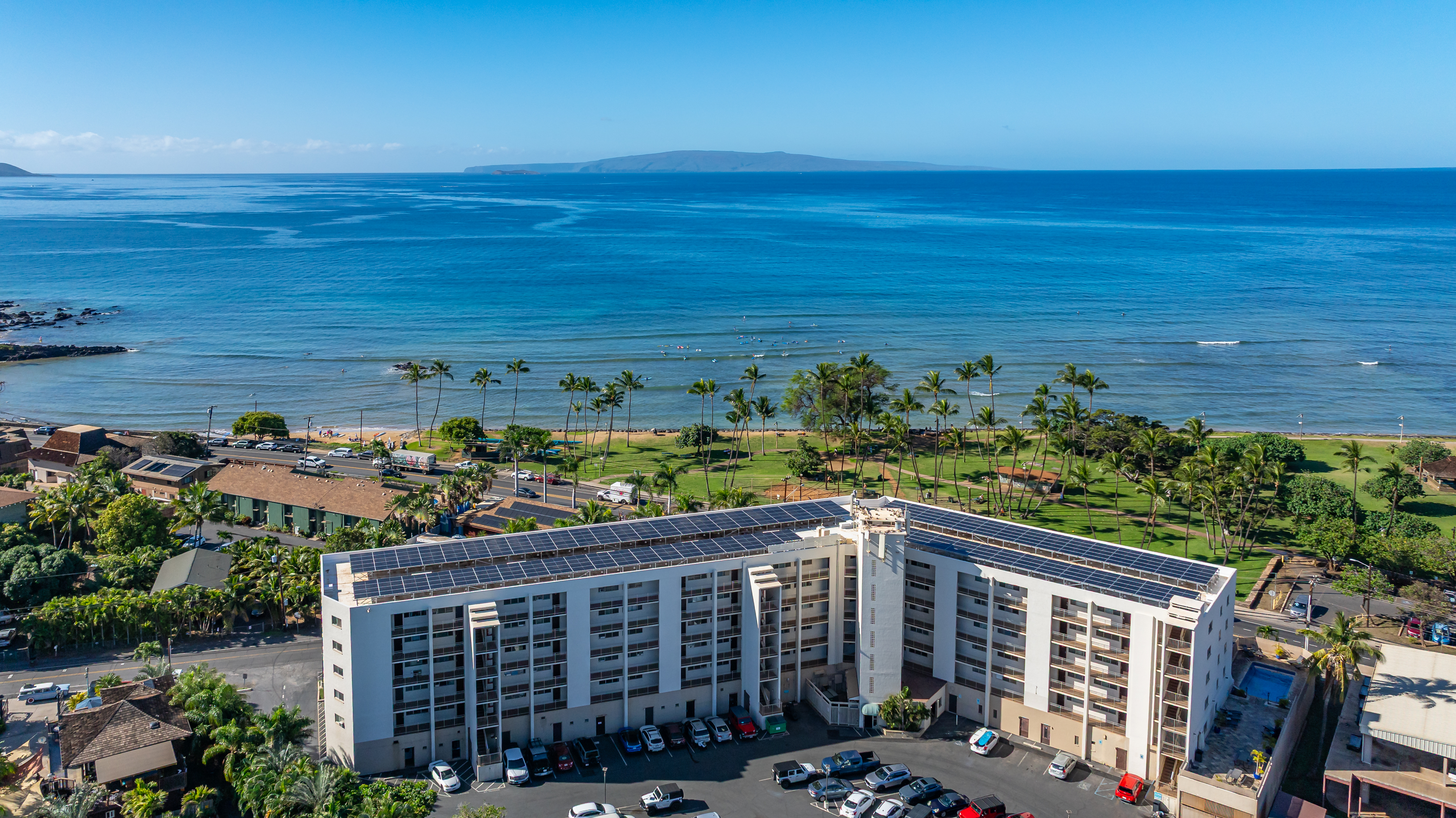
Maui’s condo market is doing something interesting in 2026.
While single-family home sales softened in July, condominium sales jumped sharply. At the same time, Maui County is moving through one of the biggest changes to vacation-rental rules the island has seen in decades.
For anyone thinking about buying a Maui condo, selling one, relocating to the island, or purchasing a vacation-rental property, those two trends are increasingly connected.
Here’s what the latest Maui real estate numbers show, how Bill 9 fits into the picture, and what buyers and owners should be watching as we move through the second half of 2026.
What Is Happening With Maui Condo Sales in 2026?
Maui condo sales surged in July 2026.
According to data from the REALTORS® Association of Maui, 82 condominiums sold during July, up 54.7% from July 2025.
Condo sales volume reached approximately $83 million, a 72% increase from the prior year, while the median condo sales price rose 2.2% to $690,000.
The single-family home market moved in the opposite direction.
There were 55 single-family home sales in July, down 8.3% year over year. The median single-family home price fell 12.5% to $1,150,000.
That creates a striking split between the two major segments of Maui real estate.
Condominiums are seeing substantially more transaction activity, while single-family homes are experiencing a slower market.
Why Are More Maui Condos Selling?
There probably isn’t one single reason.
Affordability is certainly part of the equation.
At a July median price of $690,000, Maui condos remain considerably more accessible than the island’s $1.15 million median single-family home.
For buyers who want a second home, future retirement property, primary residence, or foothold in the Maui real estate market, condos can provide a significantly lower entry point.
But there is another factor affecting the market: Bill 9.
Some owners of vacation-rental condos affected by Bill 9 are reassessing whether they want to hold those properties through the coming regulatory changes. At the same time, some buyers see softer pricing and increased inventory as an opportunity.
That means part of the increase in condo sales may represent a market adjusting to a new regulatory reality.
What Is Maui Bill 9?
Bill 9, now Maui County Ordinance 5909, phases out transient vacation rental use in certain apartment-zoned properties.
Mayor Richard Bissen signed the legislation into law on December 15, 2025.
The ordinance primarily affects vacation-rental properties operating in Maui County’s A-1 and A-2 Apartment Districts under longstanding exemptions commonly associated with the Minatoya List.
Importantly, Bill 9 does not eliminate every vacation rental on Maui.
Hotel-zoned properties, timeshares, qualifying variances, and other uses legally permitted outside the affected apartment-zoned framework may continue operating.
When Do Bill 9 Vacation Rentals Have to Stop?
The phase-out schedule depends on location.
For affected properties in the West Maui Community Plan area, transient vacation rental use must cease January 1, 2029.
For affected properties elsewhere in Maui County, including South Maui, transient vacation rental use must cease January 1, 2031.
That means a condo operating legally as a vacation rental today may still generate several more years of short-term rental income.
But buyers need to evaluate what happens after the applicable deadline.
Does Bill 9 Mean Every Minatoya Condo Will Lose Vacation-Rental Rights?
Not necessarily.
This is where an important 2026 development comes into play.
Maui County passed Bill 88 in June 2026, creating two new hotel zoning classifications known as H-3 and H-4.
Bill 88, now Ordinance 6008, was designed to create a potential rezoning pathway for some apartment-zoned properties that have historically operated as transient vacation rentals. The Council approved the measure 7-2.
Approximately 4,500 units across roughly 104 properties have been discussed as potential candidates for the new hotel classifications.
However, there is a critical distinction:
Bill 88 does not automatically rezone those condos.
It created H-3 and H-4 zoning categories. Individual properties must still go through a separate rezoning process.
That process is already beginning for some properties.
So a buyer should not assume either that a Minatoya condo is definitely losing vacation-rental rights or that it is definitely going to receive hotel zoning.
The answer is increasingly building-specific.
What Does Bill 9 Mean If You’re Buying a Maui Condo?
For buyers, today’s market can present genuine opportunities, but due diligence matters more than ever.
The first question should not simply be:
“How much rental income did this condo generate last year?”
You also need to ask:
What is the property’s actual zoning?
Is it affected by Bill 9?
Is it on the Minatoya List?
Is the applicable phase-out date 2029 or 2031?
Is the property being considered for H-3 or H-4 zoning?
Has any rezoning actually been approved?
Would you still want to own the property if short-term vacation rental use eventually ended?
That final question is particularly important.
If you are buying primarily as a second home, future Maui residence, or long-term rental, Bill 9 may affect you very differently than a buyer whose financial model depends entirely on nightly vacation-rental income.
How Should Buyers Value a Bill 9 Condo?
One way I look at these properties is to separate the existing value from the potential upside.
First, ask:
What is this condo worth if it eventually becomes primarily a residential or long-term-rental property?
Then consider separately:
What additional value might exist if the property successfully obtains H-3 or H-4 hotel zoning?
That approach can be much safer than paying a premium today based on the assumption that rezoning will happen later.
A proposed rezoning is not the same thing as an approved rezoning.
What Does This Mean If You Own a Maui Condo?
If you currently own an affected Maui vacation-rental condo, there isn’t one answer that applies to every owner.
Some owners may decide to sell while several years of legal short-term rental use remain.
Others may continue collecting vacation-rental income and see how the rezoning process develops.
Some associations may successfully pursue H-3 or H-4 hotel zoning.
Other owners may decide that converting to long-term rental or personal use makes more sense.
The important thing is understanding your specific building’s position rather than making a decision based on island-wide headlines.
How Should a Bill 9 Condo Be Marketed?
The buyer pool for some properties is changing.
Historically, a Minatoya List condo might have been marketed almost exclusively around vacation-rental income.
Today, a stronger strategy may be to explain the property’s complete value proposition.
That could include:
Current legal vacation-rental income.
Remaining years of vacation-rental use.
Potential personal or second-home use.
Long-term rental potential.
Location and lifestyle value.
Possible H-3 or H-4 rezoning.
Current pricing relative to historic values.
A property marketed simply as an “Airbnb investment” may appeal to a narrower audience today than one positioned accurately around multiple possible uses.
Are Lawsuits Challenging Maui Bill 9?
Yes.
Property owners have filed legal challenges to Bill 9, including Malter v. County of Maui and Lynam v. County of Maui.
The litigation raises significant questions surrounding property rights and the County’s ability to terminate longstanding vacation-rental use.
However, Bill 9 remains the law today.
The safest approach for buyers is therefore not to purchase based on an assumption that the courts will eventually overturn it.
Until a court changes the legal framework, the current deadlines should be incorporated into any purchase analysis.
Are Maui Condos Becoming a Better Buying Opportunity?
For certain buyers, possibly.
A market with more inventory, greater negotiating leverage, and regulatory uncertainty can create opportunities that were difficult to find when Maui real estate was moving rapidly during the pandemic-era market.
But lower price does not automatically mean better value.
A $650,000 condo with major insurance issues, high HOA fees, a large special assessment, difficult financing, and uncertain rental rights can ultimately be more expensive than a $750,000 condo with stronger fundamentals.
This is why evaluating Maui condos building by building is becoming increasingly important.
Why Are Maui Condo Sales Rising While Home Sales Are Falling?
The most likely explanation is a combination of price and changing buyer behavior.
Condos provide a substantially lower entry point into Maui real estate than single-family homes.
At the same time, Bill 9 is encouraging some existing condo owners to sell, creating inventory and opportunities for buyers who may not be primarily interested in vacation-rental income.
That combination can increase transaction volume even while parts of the condo market remain under pricing pressure.
In other words, rising sales do not necessarily mean every condo is suddenly appreciating.
It means more buyers and sellers are finding a price at which they are willing to make a deal.
The Bottom Line on Maui Condo Sales and Bill 9
Maui’s condo market is not simply booming or crashing.
It is repricing and reorganizing.
July 2026 condo sales were up 54.7% year over year, while single-family sales declined 8.3%.
At the same time, Bill 9 is changing how buyers value certain vacation-rental condos, and Bill 88 has created a possible H-3/H-4 hotel rezoning pathway for some affected properties.
That combination is creating one of the more unusual Maui condo markets we have seen in years.
For buyers, it can mean greater selection and negotiating leverage.
For sellers, it means understanding exactly how your property should be positioned.
And for investors, it means zoning and future use may now matter just as much as historical rental revenue.
If you're considering a specific Maui condo and want to know its current zoning, Bill 9 status, Minatoya List status, potential H-3/H-4 rezoning path, or how recent sales in the building compare, I’m happy to look at the specific property with you.
I’m Benjamin Finnerty, REALTOR® on Maui and Director of Sales for The 808 Team. I work with buyers and sellers throughout Maui, with a particular focus on South Maui real estate, including Kīhei, Wailea, and Mākena.
Benjamin Finnerty REALTOR® RS-83812
Keller Williams Realty Maui RB-21851
This article reflects publicly available information as of August 2026 and is intended for general informational purposes only. It is not legal, tax, zoning, or investment advice. Maui County legislation, litigation, zoning classifications, and individual property status can change, so buyers and owners should verify current information before making a real estate decision.

The 808 Team Maui
| The 808 Team | Keller Williams Realty Maui
or another way