
Categories
Buying Real Estate in MauiPublished August 1, 2026
Hidden Costs of Owning Property on Maui Most Buyers Miss

Property on Maui Most Buyers Miss
Buying property on Maui can absolutely be worth it. You get incredible weather, world-class beaches minutes away, and a lifestyle that feels relaxed in a way very few places can match.
But the purchase price is only the beginning. I’ve seen buyers budget carefully for the mortgage and down payment, then get blindsided by the real monthly and annual costs of ownership. If you’re thinking about buying a house or condo on Maui, you need to understand the full picture before you make an offer.
Key takeaways
- Maui property taxes vary by classification, not just by home value.
- Homeowner’s insurance can be significantly higher near the shoreline or in higher-risk areas.
- HOA fees need to be evaluated by what they include, not just the monthly number.
- Utilities on Maui are expensive, especially electricity and water.
- Salt air accelerates wear and tear, which means more frequent maintenance.
- Landscaping costs can add up fast, especially on larger or luxury properties.
- Termite inspections and preventive treatment are part of normal ownership on Maui.
- Some properties may require flood insurance, which can materially increase carrying costs.
- Deferred maintenance matters as much as visible condition during due diligence.
- Island logistics make repairs slower and more expensive than many mainland buyers expect.
What are the hidden costs of owning property on Maui?
The hidden costs of owning property on Maui are the recurring and often overlooked expenses beyond the mortgage. These include property taxes, insurance, HOA fees, utilities, maintenance, termite prevention, landscaping, flood-related costs, travel for part-time owners, and slower repair timelines due to island supply chains.
That matters because two properties with similar purchase prices can have very different true ownership costs.
Why buyers get surprised
Most buyers focus on the big three: purchase price, down payment, and mortgage payment. That’s normal.
The problem is Maui ownership has several location-specific costs that don’t always show up until you’re deep into escrow or already living in the property. The better prepared you are up front, the better your ownership experience will be.
1. Property taxes are not one-size-fits-all
Property taxes on Maui can vary dramatically based on how the property is classified. That’s one of the biggest surprises for buyers.
Two similar homes can have very different tax bills if one is owner-occupied, another is used as a long-term rental, another is a short-term vacation rental, or one falls into a luxury bracket. I’ve seen buyers compare nearly identical properties and assume the taxes should be close, only to find out classification was driving the difference.
What to do before you buy
- Ask how the property is currently classified
- Confirm how you plan to use it after closing
- Review the current tax bill and ask whether it could change based on your use
- Be especially careful with vacation-rental or luxury classifications
Decision rule: If you’re comparing properties, never compare taxes by value alone. Compare taxes by classification and intended use.
2. Homeowner’s insurance can be much higher than expected
Insurance has become one of the biggest conversations in Hawaii real estate. Premiums have increased in many areas, especially with more attention on fire, flood, and shoreline risk.
A property’s insurance cost may be affected by:
- Distance from the ocean
- Construction type
- Age of the home
- Roof condition
- Fire risk
- Flood exposure
- Claims history
- Whether it sits in a flood zone
For many buyers, this is where the math changes fast. A home that looks affordable on paper may carry much higher insurance costs than expected.
What to do before removing contingencies
- Get an insurance quote early
- Ask about flood-zone status
- Review roof age and condition
- Check whether the property has any prior claims history
- Don’t assume condo ownership eliminates all insurance concerns
If you only do one thing here, do this: get insurance quotes before you get too far into the deal.
3. HOA fees can help or hurt depending on what they cover
If you’re buying a condo or a home in a planned community, you’ll likely have HOA fees. Many buyers make the mistake of looking only at the monthly number.
That’s incomplete. The real question is what’s included.
In many Maui condos, HOA dues may cover:
- Water
- Sewer
- Trash
- Landscaping
- Exterior maintenance
- Roof replacement
- Building insurance
- Pool and shared amenities
- Sometimes cable and internet
In planned communities, the coverage is often more limited. It may include only things like trash, sewer, and private road maintenance.
How to evaluate an HOA properly
- Review the HOA budget and reserves
- Ask what utilities and services are included
- Find out whether there are planned special assessments
- Compare the dues to the age and maintenance needs of the property
A higher HOA fee is not automatically bad. In some cases, it offsets other ownership costs you would otherwise pay separately.
4. Utilities on Maui are often higher than mainland buyers expect
Utilities are almost guaranteed to surprise people, especially electricity and water.
Maui has high per-kilowatt electricity costs, and water isn’t cheap either. That means monthly utility bills can feel very different from what many buyers are used to on the mainland.
One of the biggest wins a buyer can get is a home with solar panels and battery storage already installed. That can save roughly $400 to $800 per month on electric bills alone, depending on the property and usage.
What to check
- Average electric bills over the last 12 months
- Whether the property has owned or leased solar
- Battery backup details
- Irrigation-related water usage
- Air conditioning usage patterns
Choose solar-equipped homes when possible if you’re trying to control long-term carrying costs.
5. Salt air means faster wear and tear
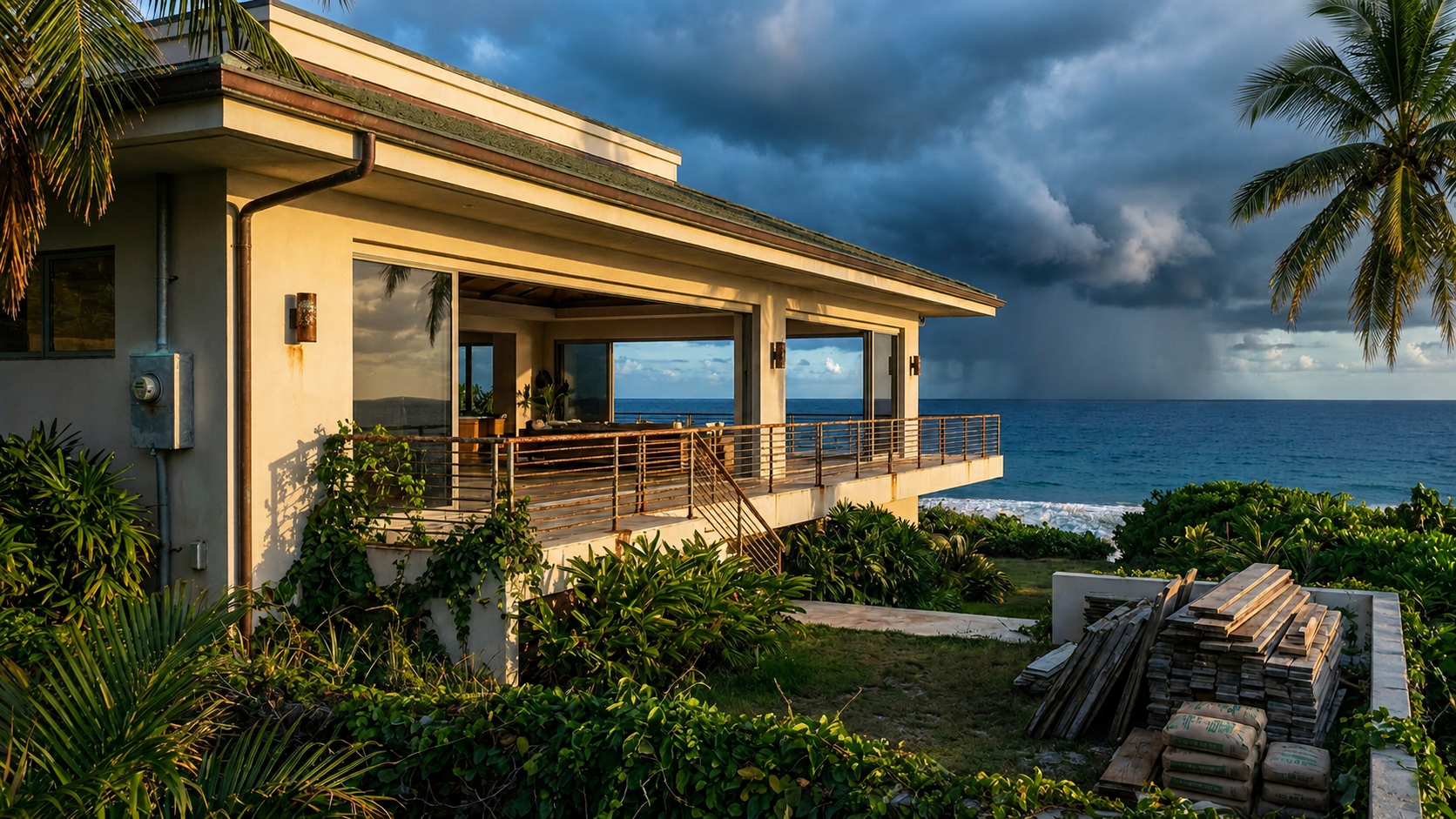
Living near the beach is one of Maui’s biggest advantages. It also comes with one of Maui’s most overlooked costs: salt air corrosion.
Salt air is hard on:
- Exterior paint
- Metal railings
- Hardware
- Window tracks
- Air conditioning equipment
- Appliances
- Garage doors
These items usually require more frequent maintenance and replacement than they would in many mainland climates.
How to budget for it
- Expect more regular exterior upkeep
- Inspect all metal components carefully
- Ask about maintenance history on AC systems and appliances
- Budget for repainting and hardware replacement sooner than you might elsewhere
This is not a reason to avoid coastal property. It’s a reason to budget realistically.
6. Landscaping can become a real monthly expense
Tropical landscaping looks beautiful, but it does not take care of itself.
Depending on the property, you may need to budget for:
- Lawn care
- Tree trimming
- Irrigation repairs
- Fertilizer
- General maintenance
- Pest treatments
On a larger or luxury property with extensive grounds, landscaping costs can climb to $2,000 to $3,000 per month faster than many buyers expect.
What to ask the seller
- Current monthly landscaping cost
- Irrigation system age and condition
- Tree maintenance schedule
- Any recent pest or drainage issues
A lush yard is part of the lifestyle. It also needs to be treated like an operating expense.
7. Termite prevention is part of normal ownership
On Maui, termites are not some rare edge case. The climate supports them year-round.
That doesn’t mean every home has a serious termite problem. It means regular inspections and preventive treatment should be viewed as routine maintenance, not an emergency-only expense.
Why this matters
Termites can often be treated effectively when caught early. The expensive problems tend to happen when termite activity has been ignored for too long.
Smart ownership plan
- Get a thorough termite inspection during due diligence
- Ask about prior treatment history
- Budget for preventive treatment and routine follow-up
- Don’t delay action if activity is found
Ignoring termite prevention usually costs much more later.
8. Flood insurance and storm-related risks can change the math
Not every Maui property requires flood insurance, but some absolutely do. If a property falls into a flood-related risk category, that can add a meaningful annual cost.
This is one of those line items that buyers sometimes discover too late.
Before you buy
- Verify flood-zone designation
- Ask for a flood insurance quote if applicable
- Review drainage around the property
- Consider exposure beyond just the home itself, including access roads and lower-level structures
Avoid assumptions here. A home can be beautiful, well-located, and still carry flood-related costs that need to be accounted for.
9. Deferred maintenance is where surprise expenses pile up
A good home inspection is essential, but you also need to think beyond the current report.
Look at the age and expected useful life of major systems:
- Roof
- Water heater
- Air conditioning
- Windows
- Plumbing
- Exterior finishes
A property can show well and still be approaching a wave of major replacements.
Better questions to ask
- How old is the roof?
- When was the water heater replaced?
- Are the windows original?
- Is the plumbing near the end of its useful life?
- Has the AC system been serviced regularly?
Planning for future maintenance is just as important as understanding current condition.
10. Part-time owners need to budget for travel and management
If this won’t be your full-time residence, ownership costs don’t stop at the property line.
You may also need to factor in:
- Flights to Maui
- Rental cars
- Property management
- Housekeeping
- Security checks
- Maintenance coordination while you’re away
If you visit often, keeping a car on island may save money over time compared to repeated rentals.
For second-home buyers, this category gets underestimated all the time.
11. Repairs take longer on an island
This is one of the least glamorous but most important realities of Maui ownership: patience is part of the deal.
You can’t always replace a fridge, source materials, or book a contractor on mainland timelines. Some parts need to be shipped in. Contractors are often booked out. Materials that might arrive in a day or two elsewhere can take six to eight weeks.
What that means for owners
- Repairs may cost more
- Projects may take longer
- Emergency planning matters more
- Preventive maintenance becomes even more valuable
If you own on Maui long enough, you learn that speed is not always an option.
Common mistakes Maui buyers make
Here are the biggest mistakes I see repeatedly:
- Budgeting only for mortgage and down payment
- Assuming property taxes are based only on value
- Underestimating insurance costs
- Looking at HOA fees without reviewing coverage
- Ignoring utility history
- Forgetting salt-air maintenance
- Skipping termite prevention planning
- Overlooking travel and management costs for part-time use
- Treating deferred maintenance like a future problem instead of a present one
- Expecting mainland repair timelines
FAQ
Are Maui property taxes high?
They can be, but the bigger issue is that they vary by classification and use. Owner-occupied, rental, short-term vacation rental, and luxury classifications can all produce different tax bills.
Is homeowners insurance expensive on Maui?
It can be, especially for shoreline properties or homes with higher fire or flood exposure. The only safe approach is to get quotes early in the buying process.
Do all Maui condos have high HOA fees?
Not necessarily. Some HOA fees are high because they include substantial services and building expenses. The better question is whether the fee provides value and whether the association is financially healthy.
Are utilities really that much higher on Maui?
Yes, they often are. Electricity and water can be meaningfully higher than what many mainland buyers expect, which is why solar can be such a major advantage.
Should I worry about termites on Maui?
You should plan for termite inspection and prevention as part of normal ownership. Regular monitoring and early treatment are far less expensive than letting an issue grow.
Is buying near the beach more expensive to maintain?
Usually, yes. Salt air can speed up corrosion and wear on metal, paint, appliances, and mechanical systems.
Next steps before you buy on Maui
If you’re seriously considering a Maui property, do these three things before making a final decision:
- Get real numbers for taxes, insurance, utilities, and HOA coverage
- Review inspection findings and deferred maintenance risk
- Build a true monthly and annual ownership budget, not just a mortgage budget
Maui real estate isn’t appealing because it’s the cheapest option. People buy here for the lifestyle: the mornings, the beach access, the sunsets, and the pace of life.
That lifestyle can absolutely be worth it. You just want to go in with your eyes open, understand the true cost of ownership, and make sure the property fits not only your dream, but your long-term budget too.
Thinking About Buying on Maui?
Buying real estate on Maui is different than buying almost anywhere else. Every property has its own story, and understanding the true cost of ownership before you buy can save you thousands of dollars—and a lot of headaches.
Whether you're looking for your primary home, a vacation property, or an investment, I'd be happy to walk you through the numbers and help you understand what to expect long before you're in escrow.
I've helped buyers navigate Maui's unique real estate market for years, and I'd love to help you make a smart, informed decision.
Reach out anytime.

Todd Hudson
REALTOR® | The 808 Team | Keller Williams Realty Maui
📞 (808) 280-2208
📧 Todd@The808Team.com
🌐 https://www.The808Team.com
"Real advice. Local knowledge. No pressure."

The 808 Team Maui
| The 808 Team | Keller Williams Realty Maui
or another way