
Categories
Maui Relocation GuidePublished May 26, 2026
Living in Haiku Maui: Where Maui Slows Down

When people think about moving to Maui, they often picture oceanfront condos, resort communities, and neighborhoods close to shopping and restaurants.
Haiku is different.
It's not a place people usually choose because it's convenient. They choose it because of how it feels.
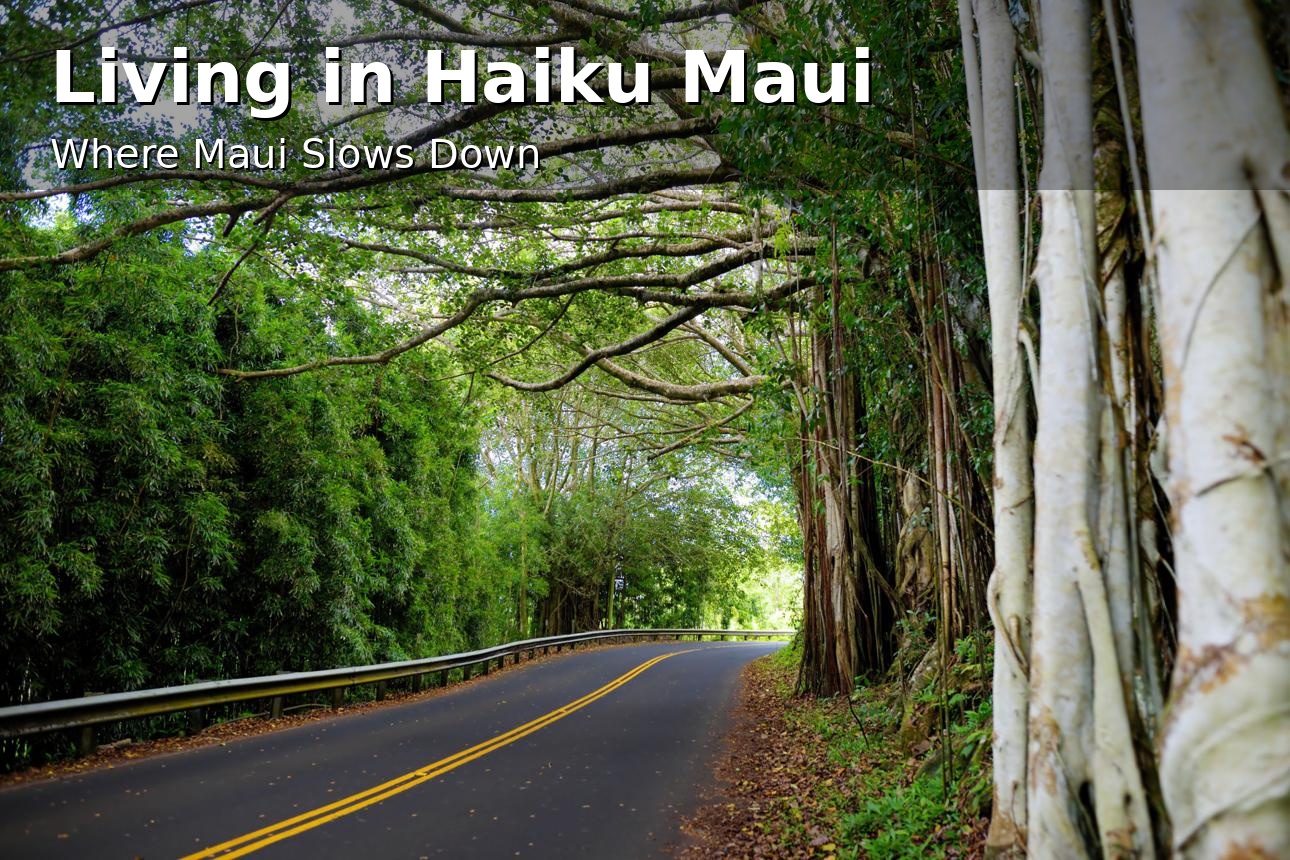
The first time many buyers drive through Haiku, they stop talking about the house and start talking about everything around it. They notice the giant trees lining the roads, the lush greenery, the open space, and the quiet. Instead of feeling rushed from one place to another, life seems to move at a different pace.
I've had more than a few buyers ask me:
"Do people ever leave Haiku?"
That's usually a pretty good sign.
For the people who connect with Haiku, there's often no place they'd rather live.
What Is It Like to Live in Haiku?
Living in Haiku has a rhythm that's hard to appreciate until you've spent some time there. The pace is slower, the surroundings are greener, and daily life tends to revolve a little more around nature and a little less around schedules. People are drawn here for the privacy, larger properties, tropical landscapes, and sense of space that's becoming harder to find elsewhere on the island.
For many residents, that's exactly the appeal. You trade some convenience for peace and quiet. You trade traffic noise for birdsong. And instead of looking out your window at your neighbor's fence, you might be looking at fruit trees, pasture land, or a wall of tropical greenery.
One thing I've noticed over the years is that people usually have a reaction to Haiku almost immediately. They either fall in love with it or decide it's a little more country than they were expecting. Both reactions are perfectly understandable.
Haiku isn't trying to be Wailea. It isn't trying to be Kihei. It isn't trying to be Kahului.
People move here because they're looking for something different.
What Makes Haiku Different?
One of the first things you'll notice is the amount of space.
Many homes sit on larger lots surrounded by mature landscaping, fruit trees, gardens, and tropical vegetation. In some neighborhoods, you can barely see neighboring homes through the greenery. That level of privacy is becoming harder to find in many parts of Maui, which is one reason Haiku continues to attract buyers looking for something outside the typical subdivision lifestyle.
I've had clients relocate from cities where homes sit only a few feet apart. Their reaction after touring Haiku is often the same:
"I forgot what quiet sounds like."
That's not something you'll find on a property flyer, but it matters.
The community itself is diverse. You'll find families, retirees, artists, entrepreneurs, remote workers, farmers, and longtime local residents all calling Haiku home. Despite their different backgrounds, they often share an appreciation for the same things: open space, natural beauty, and a lifestyle that feels a little less rushed.
If you're exploring different lifestyles around Maui, you may also enjoy my guides on Living in Makawao, Living in Kula, and Living in Pukalani, each of which offers a very different experience from life on the North Shore.
What Is the Weather Like in Haiku?
If you're coming from Kihei, Wailea, or much of South Maui, one of the first things you'll notice is how green everything is.
There's a reason for that.
Haiku receives more rainfall than many other parts of Maui, helping create the lush tropical environment the area is known for. The result is an incredible landscape filled with towering bamboo, flowering trees, thriving gardens, waterfalls, and greenery that remains vibrant throughout much of the year.
I've had buyers express concerns about the rain before moving here. Then six months later they're sending me photos of avocado trees, banana plants, orchids, and vegetable gardens that seem to grow faster than they can keep up with.
Life in Haiku means embracing a little more weather, but it also means enjoying the beauty that weather creates. A brief shower might pass through in the morning, the sun comes out an hour later, and everything somehow looks even greener than before.
For many residents, the weather isn't a drawback.
It's one of the reasons they chose Haiku in the first place.
Why So Many Residents Stay for Decades
One thing that stands out about Haiku is how many longtime residents you'll meet. I've talked with homeowners who moved here in the 1980s, raised their families, watched their children grow up, and still have no interest in living anywhere else. That's not something you hear in every community.
I think part of the reason is that people tend to build a different kind of relationship with their property here. In many neighborhoods, a house is simply where you live. In Haiku, it often becomes much more than that. Gardens mature over the years, fruit trees begin producing more than a family can eat, outdoor gathering spaces evolve, and families create memories that become tied to the land itself. The longer people live here, the more connected they become to their surroundings.
The community plays a role as well. Haiku has a mix of longtime local families, artists, entrepreneurs, farmers, remote workers, and people who came to Maui looking for a different pace of life. Despite those different backgrounds, there is a shared appreciation for the things that make the area unique. People value the open space, the natural beauty, and the feeling that life doesn't always have to move quite so fast.
I've met plenty of residents who originally thought they were making a temporary move. Maybe they planned to stay for a few years before moving somewhere else. Then life happened. They built friendships, established routines, planted roots, and before they knew it, a decade had passed. In many cases, they can't imagine living anywhere else.
That's one of the things I find most interesting about Haiku. People don't just buy property here. Over time, they become part of the community, and that connection is often what keeps them here for years or even decades.
One Unexpected Perk: You Can Actually Use Your Yard
This might sound simple, but it's something many buyers don't fully appreciate until they start looking at homes in Haiku.
Outdoor space often becomes part of everyday life here.
Instead of a small patch of grass, you may have room for fruit trees, raised garden beds, a detached cottage, a workshop, chickens, or simply a quiet place to sit outside and enjoy the trade winds.
I've had clients purchase property with no plans to become gardeners only to find themselves a few years later harvesting avocados, citrus, bananas, herbs, and vegetables from their own backyard.
There's something about Haiku that encourages people to spend more time outdoors.
And in a place this beautiful, that's not a bad thing.
Things to Do Around Haiku
One of the things people love about living here is that entertainment doesn't always revolve around shopping centers, nightlife, or packed tourist attractions.
Life tends to happen outdoors.
A typical weekend might involve grabbing coffee with friends, heading to a local farmers market, exploring nearby trails, spending time in the garden, taking a drive toward the North Shore, or enjoying a beach day in nearby Paia.
Some of the area's most popular attractions and activities include:
- Twin Falls
- Ho'okipa Beach Park
- Paia Town
- The Road to Hana
- Local farm stands and farmers markets
- Hiking trails throughout East Maui
- Waterfalls and bamboo forests
- Surfing, windsurfing, and ocean activities along the North Shore
Many residents choose Haiku because they genuinely enjoy spending time outdoors. The lifestyle tends to revolve around nature more than convenience, and that's a big part of what makes the area special.
Is Haiku a Good Place to Raise a Family?
For many families, absolutely.
The larger properties, outdoor lifestyle, community atmosphere, and access to schools make Haiku a popular choice for parents looking for a little more space. Kids often grow up with room to explore, ride bikes, play outdoors, and enjoy a lifestyle that's increasingly rare in many parts of the country.
Families also appreciate being within reasonable distance of schools, sports programs, shopping, and medical services while still enjoying the privacy and natural beauty that make the area unique.
What Are the Downsides of Living in Haiku?
No community is perfect, and Haiku certainly isn't for everyone.
The same things that attract some buyers can be drawbacks for others.
You'll experience more rain than most parts of the island. The rural feel means fewer conveniences are immediately around the corner. Depending on where you live, trips to Costco, the airport, or larger shopping centers may take a little longer.
For some people, those factors are deal breakers.
For others, they're part of the reason they chose Haiku in the first place.
Most residents would happily trade a few extra minutes in the car for the privacy, greenery, and peaceful lifestyle they enjoy every day.
Todd's Take
If someone asked me where they could find one of the strongest "old Maui" feelings that's still practical for everyday life, Haiku would be near the top of my list.
Not because it's frozen in time.
Not because it hasn't changed.
But because life still feels connected to the land in a way that's becoming harder to find.
The trees are bigger. The lots are larger. The pace feels slower. People spend more time outside. And there is a genuine appreciation for the natural beauty that surrounds the community.
I've had buyers come to Maui convinced they wanted something completely different, only to spend a day in Haiku and start rethinking everything. It doesn't happen with everyone, but when it does, it's usually because they've connected with the lifestyle more than the property itself.
That's the thing about Haiku.
People don't move here because it's trendy.
They move here because it feels right.
Thinking About Living in Haiku?
Whether you're considering Haiku, Makawao, Kula, Pukalani, Kahului, Wailuku, Kihei, or Wailea, I'd be happy to help you compare neighborhoods, weather patterns, schools, commute times, and lifestyle differences so you can find the community that fits you best.
One of the biggest mistakes buyers make is focusing only on the property itself. The reality is that where you live can have just as much impact on your happiness as the home you purchase.
If you're considering a move to Maui, let's talk story.
About the Author

Todd Hudson is the founder of The 808 Team at Keller Williams Realty Maui and has helped hundreds of buyers and sellers navigate Maui's unique real estate market. Consistently ranked among Hawaii's top-producing Realtors, Todd specializes in Maui relocation, luxury homes, investment properties, vacation rentals, and helping buyers find the right community for their lifestyle.
Contact Todd
📱 808-344-3584
📧 Todd@The808Team.com
🌐 The808Team.com

The 808 Team Maui
| The 808 Team | Keller Williams Realty Maui
or another way