

Categories
Maui Condo CommunitiesPublished November 25, 2026
Maui Condo Master Policy Deductibles: How Much Loss Assessment Coverage Do You Need Before You Buy?

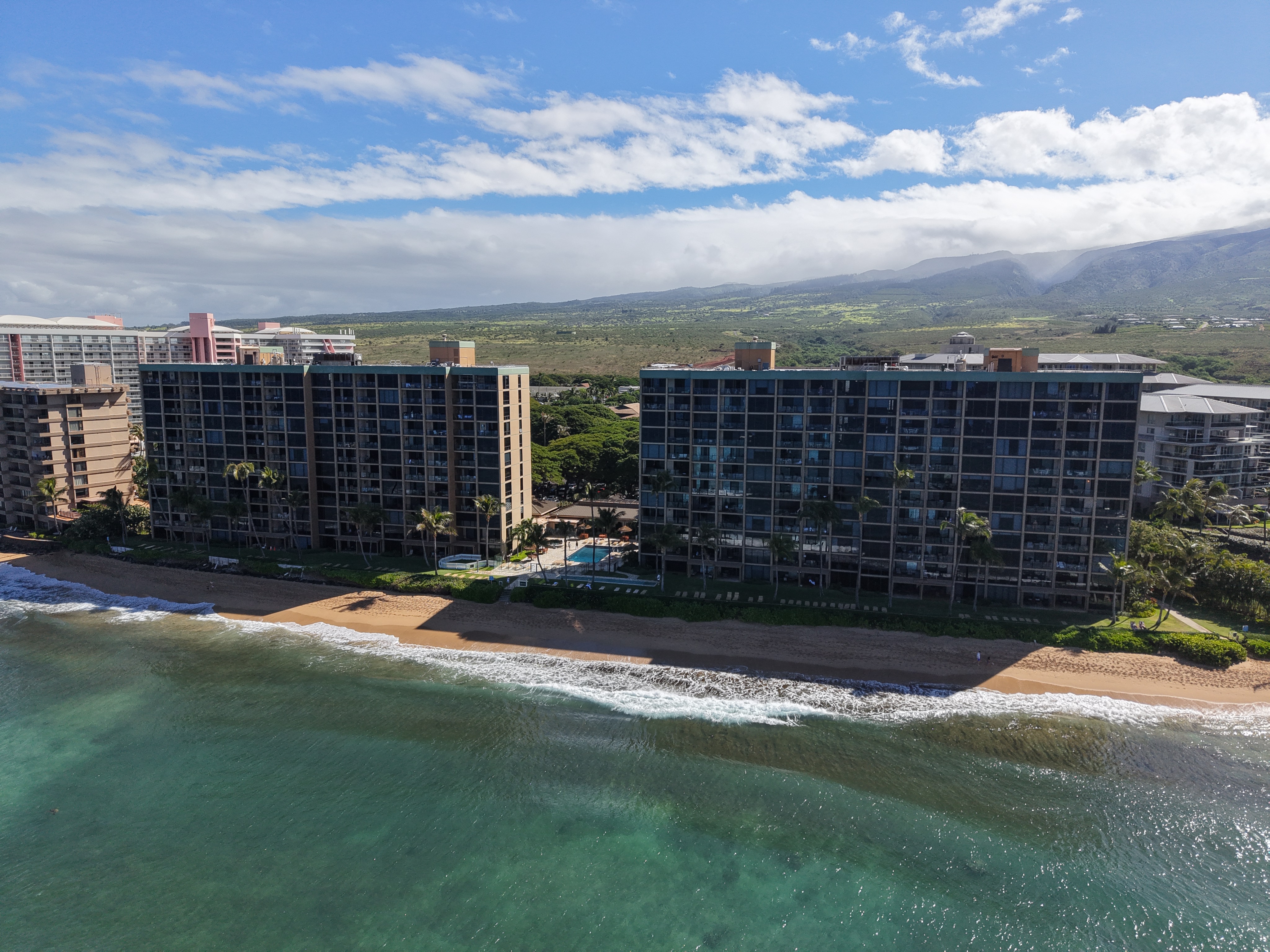
Can a Maui condo association make me pay its insurance deductible?
Yes. Under Hawaiʻi condo law (HRS §514B-143(d)), an association's board can pay the master policy deductible as a common expense, charge it to the unit where the damage started or the units that were affected, or spread it across all owners through a special assessment. Hawaiʻi master policy deductibles that used to run $10,000 to $25,000 per unit can now reach $250,000, while a standard HO-6 condo policy may include as little as $1,000 of loss assessment coverage. Before you buy, find out the building's deductibles and how the board allocates them, then ask a licensed insurance agent to size your own policy to match.
By Benjamin Finnerty, REALTOR® | Director of Sales, The 808 Team | November 25, 2026
Most Maui condo buyers ask two insurance questions: what are the dues, and what will my own policy cost? The more important question usually goes unasked: if the building has a claim, what's my share of the deductible?
On Maui right now, that one number can be bigger than your down payment on a small condo. Here's how it works, why it has grown so much, and what to check before you write an offer.
Two policies, one gap
Every Maui condo is covered by two kinds of insurance:
- The master policy, bought by the association (AOAO). It covers the building and common elements, often with separate policies for hurricane and for "all other perils" like fire and water damage. Its cost is built into your dues.
- Your HO-6 policy, which you buy yourself. It covers your belongings, your liability, the interior finishes the master policy leaves out, and, through loss assessment coverage, your share of certain association bills after a covered loss.
The gap sits between them. The master policy pays only after its deductible. The association still has to come up with the deductible, and Hawaiʻi law lets the board pass it to owners.
What Hawaiʻi law allows the board to do
HRS §514B-143(d) gives the board, in the case of a claim for damage to a unit or the common elements, three options: pay the deductible as a common expense, assess it against the owners who caused the damage or whose units the damage came from, or require the owners of the affected units to pay it.
The state's Real Estate Commission puts it plainly in its condo insurance bulletin: the board may assess the master policy deductible to the unit where the loss originated or to the units affected by the loss, and the association may also charge a special assessment to all unit owners.
In practice, that means two very different exposures:
- A water leak from your unit or the unit above. The full all-perils deductible can land on one or two owners.
- A hurricane that damages the whole building. The hurricane deductible, often a percentage of the building's insured value, gets spread across every owner.
Your building's declaration, bylaws, and house rules spell out which approach your board uses. Some associations also adopt a written deductible allocation policy. That's a document you want in hand before you're under contract.
Why the numbers have grown so much
Hawaiʻi's condo insurance market has been squeezed since before the 2023 Lahaina fire, and the fire made it worse. When the Legislature passed Act 296 in 2025, it found that master policy premiums had risen sharply and that insurers had raised deductibles from what used to be $10,000 to $25,000 per unit, per occurrence, to as much as $250,000.
Hurricane coverage is even tighter. The Governor's condo insurance proclamations noted that only three insurers were writing master policies in Hawaiʻi, often covering just 20% to 30% of a building's hurricane exposure. Associations fill the rest with surplus lines carriers at higher rates and higher deductibles. In mid-2025, about 1,200 Hawaiʻi associations were reported to be without full hurricane coverage.
The state has stepped in on both sides:
- The Hawaiʻi Hurricane Relief Fund (HHRF) was reactivated in 2025 to write excess hurricane coverage for condo associations. It covers association property only, not individual units, and it sits on top of a primary hurricane policy of at least $10 million. Its own deductible is set at 2% of building value. By April 2026 it had issued 97 association policies.
- The Hawaiʻi Property Insurance Association (HPIA) revamped its HO-6 unit owner policy for 2026, with up to $100,000 of dwelling coverage and up to $100,000 of loss assessment coverage. State officials said it was aimed at the high per-unit deductibles that can reach $50,000 or more. New business opened May 1, 2026.
None of this makes the gap go away. It means the coverage to fill it now exists, and you have to ask for it.
What a standard HO-6 actually includes
Here's where buyers get caught. Many standard HO-6 policies include only a small amount of loss assessment coverage, often around $1,000. More can usually be added by endorsement, with some carriers offering $10,000 to $100,000. Two fine-print points matter:
- Loss assessment pays only for losses your own policy would cover. If your HO-6 excludes hurricane and the building's hurricane deductible is assessed, your loss assessment coverage may not respond. Ask how hurricane is handled on your policy specifically.
- Some policies cap what they'll pay toward a master policy deductible at a lower amount than the overall loss assessment limit.
Ask your insurance agent these questions in writing. Don't assume.
A quick way to estimate your exposure
Before you call an agent, rough out the number yourself from the association's insurance summary:
- Hurricane: take the hurricane deductible (for example, 2% to 5% of the building's insured value) and multiply it by your unit's common interest percentage from the declaration. A 2% deductible on a $60 million building is $1.2 million. If your unit's common interest is 0.8%, your share is about $9,600.
- All other perils: look up the per-occurrence deductible and the board's allocation rule. If the board charges it to the unit where a leak started, your exposure is the whole deductible.
The higher of those two numbers is your starting point for a conversation with a licensed insurance agent. It may also be a number your association asks about. Some associations now ask owners for proof that they're insured up to their share of the higher deductible.
The documents to ask for before you write an offer
On Maui, the condo documents come during escrow, but you can ask the listing agent for the key items up front. Ask for:
- The master policy declarations pages, for both hurricane and all-other-perils coverage, showing limits and deductibles.
- The board's deductible allocation policy or the bylaw section that covers it.
- The insurance summary in the current budget, including whether the building has full replacement-cost hurricane coverage or is underinsured.
- Recent board minutes, which tell you about open claims, renewal problems, or a planned increase in deductibles.
- Any HHRF policy the association holds, and how its 2% deductible works alongside the primary policy.
- A quote for your own HO-6 with the loss assessment limit set to your estimated exposure, before your due diligence period ends.
If the building is underinsured for hurricane, you're exposed to more than the deductible. A loss above the policy limits can also be passed to owners as a special assessment.
Is a high-deductible building a deal-breaker?
Not automatically. Many solid South Maui buildings now carry high deductibles because that's what the market offers. What matters is whether you know the number, whether your own policy covers it, and whether the price reflects it.
There's also a buying opportunity. With 68 Maui condo sales in October 2026 and a countywide condo median of $634,500, according to October figures reported by Maui Now, buyers have room to ask questions and negotiate. Buyers who can read a master policy have an advantage over buyers who can't.
Frequently Asked Questions
What is loss assessment coverage on a condo policy?
It's coverage on your HO-6 that pays your share of an association bill after a covered loss, such as a master policy deductible passed to owners. Standard limits are often low, around $1,000, and higher limits are added by endorsement.
Can a Hawaiʻi condo board charge me the whole master policy deductible?
It can, depending on the building's documents. HRS §514B-143(d) allows the board to charge the deductible to the owners whose unit caused the damage or the owners of the affected units, or to pay it as a common expense.
How high are Maui condo master policy deductibles in 2026?
They vary by building. The Legislature found that per-unit deductibles that once ran $10,000 to $25,000 can now reach $250,000, and hurricane deductibles are often a percentage of the building's insured value.
Does the Hawaiʻi Hurricane Relief Fund cover my unit?
No. The HHRF insures condo associations only, as excess hurricane coverage. Your unit, belongings, and loss assessment exposure are covered by your own HO-6.
When should I get an HO-6 quote?
During your due diligence period, after you receive the master policy details and before your contingencies expire. That way you know your true monthly cost before you're committed.
Before you make an offer
A Maui condo's dues tell you what the building costs to run. The master policy deductible tells you what one bad day could cost you. Know both before you commit.
Before you write an offer on a Maui property, send it to Benjamin. He'll review the zoning and STR status, tenure, AOAO documents and reserves, any association loans or assessments, and the flood zone, and tell you what to ask about — so you go in with eyes open. Call or text 808-481-9748 or email benjamin@the808team.com for your free Pre-Offer Property Review.
This article is general information, not legal, insurance, tax, or lending advice. Coverage, limits, and exclusions depend on your policy and your building's governing documents. Consult a licensed insurance agent, your lender, or an attorney about your situation.
Related reading
- Before You Buy on Maui: What Hawaii's Insurance Market Shake-Up Means for Your Bottom Line
- The Truth About HOA Special Assessments on Maui in 2026
- Buying a Maui Condo With a State Repair Loan: What to Check
- Financing a Maui Condo in 2026
About Benjamin Finnerty, REALTOR® | Director of Sales, The 808 Team
Benjamin Finnerty (S) is a REALTOR® (RS-83812) and Director of Sales for The 808 Team at Keller Williams Realty Maui (RB-21851). A South Maui specialist based in Kīhei, he works with buyers all over the island on condos, short-term rental investments, and luxury homes, including what Bill 88 and the Minatoya List mean for their purchase. He is fluent in Mandarin. Reach Benjamin at 808-481-9748 or benjamin@the808team.com.
中文摘要
在毛伊岛购买公寓前,请先了解大楼总保单(master policy)的免赔额,以及业主协会(AOAO)如何分摊。根据夏威夷州法律 HRS §514B-143(d),董事会可以把免赔额作为公共开支支付,也可以向损失源头的单位或受影响的单位收取,或向全体业主收取特别评估费。夏威夷的公寓免赔额已从过去每单位1万至2.5万美元上升到最高25万美元,而标准 HO-6 保单的损失分摊(loss assessment)保额可能只有1,000美元。出价前,请索取总保单申报页、免赔额分摊政策和董事会会议记录,并请持牌保险经纪人按您的实际风险调整 HO-6 保额。
普通话服务
Benjamin Finnerty 精通普通话,可以用中文为您解答在毛伊岛买房的所有问题,包括公寓保险、业主协会文件、短租法规(Bill 9 和 Bill 88)以及购房流程。
联系方式:
电话 / 短信:808-481-9748
电子邮件:benjamin@the808team.com

The 808 Team Maui
| The 808 Team | Keller Williams Realty Maui
or another way